Research & Development

What we're building next.

Alongside the products we ship, we run our own development programs — instrument platforms, data acquisition systems, and ion optics aimed at problems we keep hearing about from the labs we work with. Most of it is internally funded, which means we can share it early. If one of these overlaps your work, we'd rather hear from you now than after it's finished.

4
Active Programs
2014
Established
16+
Countries Served
In Development

Active Research Programs

Four programs currently underway. Each began with a researcher describing a problem no available product solved.

01

Universal Modular Vacuum Chamber

Status — Prototype operational

A vacuum system built from extruded aluminum tube instead of machined stainless. Chamber segments are joined by universal interface plates, and a section is simply a length of tube cut to size — need a longer stage, cut a longer piece. The interface plates carry standard KF fittings, so the chamber drops into an existing vacuum setup without custom flanges.

The extrusion is the key idea. Its inner wall carries machined grooves that accept printed circuit boards directly, so PCB-based ion optics slide into the chamber and locate themselves — no electrode stack to machine, no alignment fixture. Changing the ion optics means ordering a new board, and the chamber it mounts in never changes.

That flexibility covers a full instrument front end: an ESI inlet, on-axis or orthogonal; a dual ion funnel; a PCB quad transfer stage; and on into an analytical quadrupole or a digital quad. Each is a board in a groove, in a chamber a lab can build without a machine shop budget.

Extruded aluminum tube Cut-to-length segments Universal interface plates Standard KF interfaces Internal grooves for PCB optics ESI: on-axis or orthogonal Dual ion funnel PCB quad transfer Analytical or digital quad
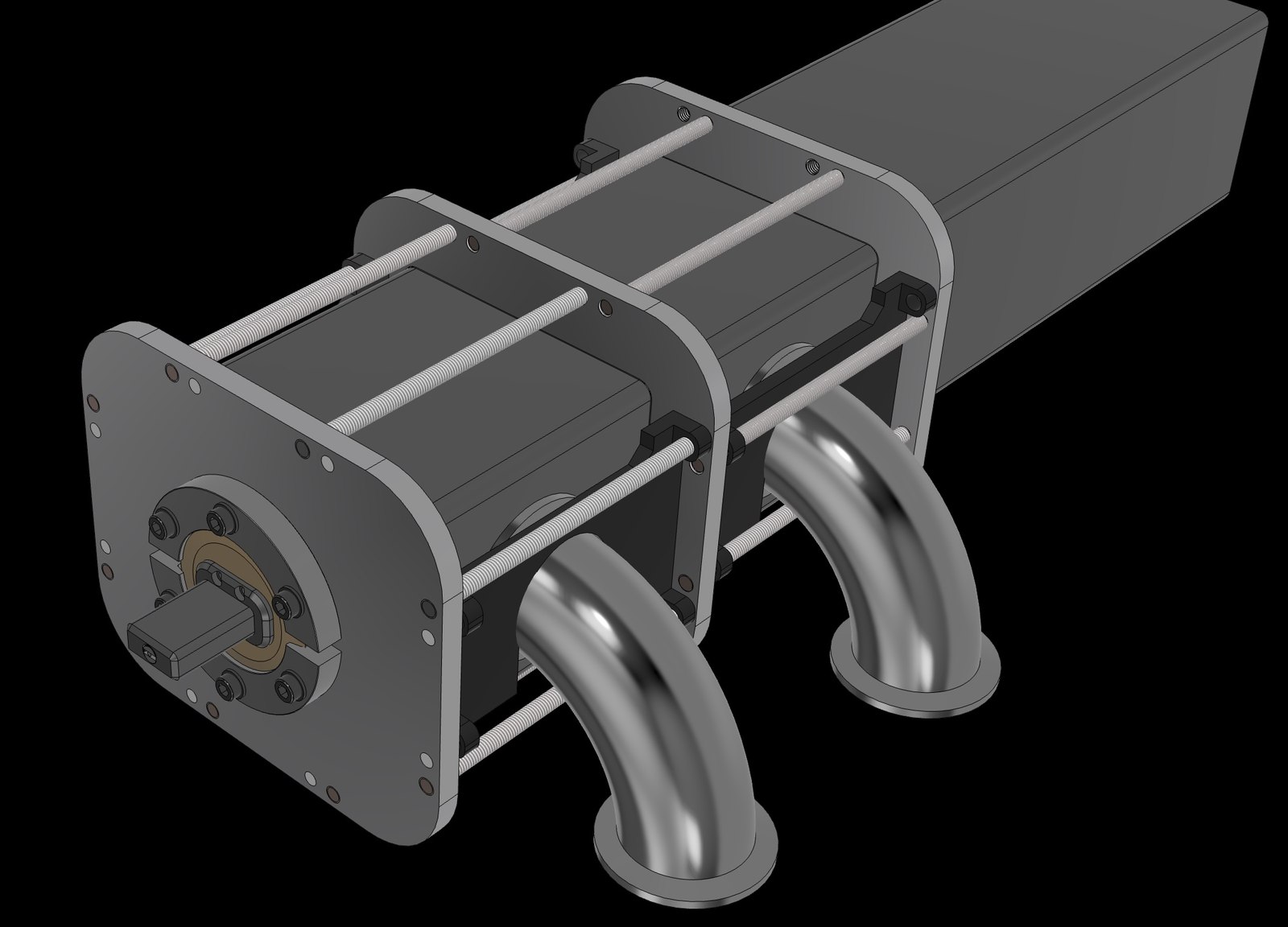
Sectioned view of the universal modular vacuum chamber showing extruded aluminum segments joined by interface plates with KF elbow fittings
Modular chamber — design render. Two pumping stages joined by universal interface plates, with KF elbows at each stage.
02

FPGA Time-to-Digital Converter & TOF Data Acquisition

Status — Active development

An FPGA-based data acquisition system for time-of-flight and ion mobility experiments, using carry-chain delay lines for sub-nanosecond time resolution without the cost of a commercial TDC card. Time-over-threshold measurement recovers pulse height information alongside arrival time, and IMS scan timestamping ties drift-time and flight-time domains together for nested IMS-TOF acquisition.

Firmware, host interface, and board design will be published on the same terms as everything else we build.

Carry-chain TDC Time-over-threshold Pulse height recovery IMS scan timestamping Nested IMS-TOF
03

USB / WiFi Vacuum Gauge

Status — In development · target under $150

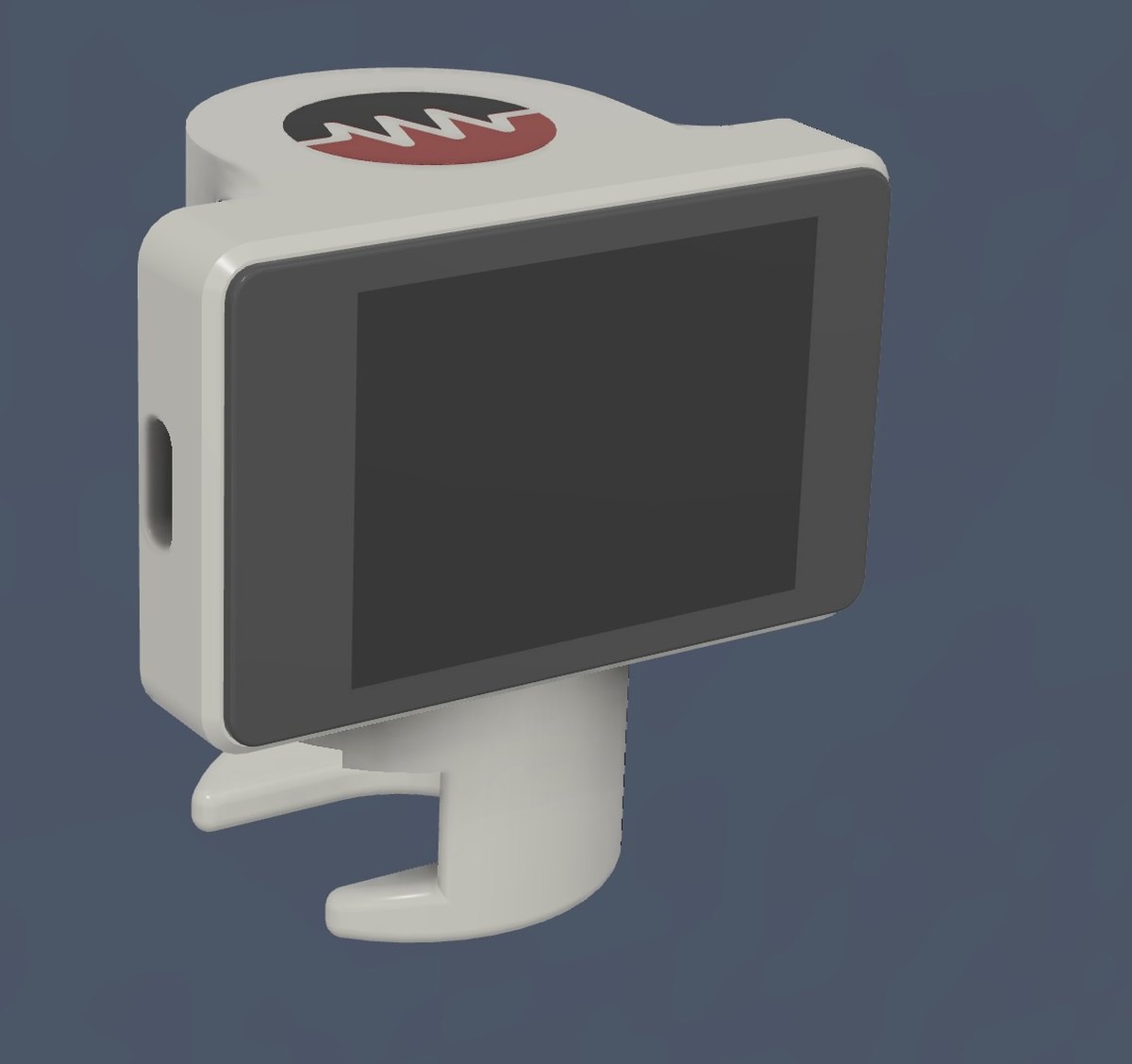
A compact, low-cost vacuum gauge that reads pressure and reports it straight to your control software — no separate controller, no rack space. The housing has a KF-16 clamp built in, so it slides directly onto a feedthrough and seals without adapters. It powers from USB, and talks to MIPS over either USB or WiFi.

The WiFi interface is the interesting part: MIPS discovers gauges on the network automatically and connects to as many as you deploy, so instrumenting a multi-stage vacuum system is a matter of adding gauges, not wiring a controller for each one. Optional programmable pressure-limit contact closures and an analog pressure output cover interlocks and legacy equipment.

It's the first of a planned family of USB/WiFi vacuum-control modules. Next in line are valve controllers that close the loop — regulating chamber pressure automatically, including maintaining a controlled differential between two chambers.

Built-in KF-16 clamp USB powered USB or WiFi to MIPS Auto-discovery, multi-gauge Programmable limit contacts Analog pressure output Target < $150
GAACE USB/WiFi vacuum gauge with built-in KF-16 clamp and front display
USB / WiFi vacuum gauge — design render. KF-16 clamp integrated into the housing.
04

Planar Quadrupoles & Ring Ion Guides

Status — Shipping, expanding

PCB-based ion transport structures for elevated-pressure regions where conventional rod sets are impractical or prohibitively expensive. Planar quadrupole geometries and printed ring guides give you multipole ion transport on a board that costs what a PCB costs. Expanded documentation and application notes are in progress.

Planar quadrupole Ring ion guide Elevated pressure RF driven
See Ion Optics Components →
Published Openly
These programs are being published as they mature
Firmware, host software, and hardware designs go up on GitHub on the same terms as everything else we build. No gated reference designs, no NDA.
Our Open Source Practice →
Working Together

Four Ways to Collaborate

From a thirty-minute phone call to a multi-year funded partnership.

💬
Free Design Consultation
The first thirty minutes cost nothing, and short questions answered by email or phone are always free. Tell us what you're trying to measure and we'll tell you honestly whether we can help — including when the answer is that you don't need us.
🔧
Contract Development
Custom hardware and firmware built to your specification. When the result is something other researchers could use, we often fund the development ourselves and simply sell you the product. When it's proprietary to your lab, we scope it as a paid project.
🎓
Research Partnerships
Named collaboration on instrument development projects. We've contributed electronics to work that's appeared in the peer-reviewed literature, and we're glad to participate as a technical partner rather than just a vendor.
📄
SBIR / STTR Co-Proposing
As a small business with in-house design, fabrication, and assembly capability, GAACE is an eligible partner on SBIR and STTR proposals. If you're building a submission that needs an instrumentation partner, talk to us early — proposal timelines reward it.

Tell us what to build next

Our product line exists because researchers asked for things that didn't exist yet. If there's a piece of electronics standing between you and an experiment, describe it to us. Even if we don't build it, the conversation is free — and more than once, a question from one lab has become a product that a dozen others now use.

Contract R&D

Rates, Plainly Stated

We keep overhead low deliberately — a small family team, in-house fabrication, and no sales organization — so that research budgets go further. Rates are negotiable for specific circumstances, and remote work by phone, email, or video conference saves considerably over on-site engagement.

Ongoing projects are invoiced monthly against progress. Single-instance technical support is invoiced after delivery. Terms are net 30.

Download the full rate sheet →
Consulting Rates — USD
First 30 minutesFree
Short email or phone replyFree
Hourly
Billed in half-hour increments, 1 hour minimum
$140
Daily
8 hours, single calendar day
$1,120
Weekly
5 days, single calendar week
$5,600

Rates above assume no travel. Travel, lodging, and materials are billed at cost plus 10%; personal vehicle at the current mileage rate. See the rate sheet for full terms.

Start a Conversation

Have a problem worth solving?

Describe the experiment. We'll tell you what it would take — and whether we're the right people to do it. The first conversation costs nothing.

Contact Us Open Source Practice